
Views: 99 Author: Site Editor Publish Time: 2026-06-01 Origin: Site

For many organic food brands, packaging is now part of the product promise. A customer may choose organic coffee, dried fruits, nuts, or snacks because they care about cleaner ingredients, responsible sourcing, and lower environmental impact. If the packaging does not support that message, the product can feel incomplete.
But sustainable packaging is not only about choosing the material that sounds greener.
A compostable bag that cannot protect roasted coffee aroma is not a good packaging choice. A recyclable pouch that uses unclear recycling claims can also create problems for brand trust. For B2B buyers, the better question is not simply:
“Is compostable packaging better than recyclable packaging?”
The better question is:
“Which packaging structure protects my food product, supports my sustainability claim and works in my target market?”
At BioPack, we usually advise organic food brands to start with the product first, then decide whether compostable food packaging or recyclable food packaging is the more practical route.
Compostable food packaging is a strong option for organic food brands that want a natural, plant-based and low-waste brand image. It is often suitable for organic coffee, tea, snacks, dried foods and premium eco-positioned product lines, provided the material structure can meet the product’s shelf life and barrier needs.
Recyclable food packaging is often a better choice when the brand needs stronger supply flexibility, broader retail acceptance, clearer recycling communication or more stable high-barrier performance. Mono-material recyclable pouches are commonly used for snacks, dried fruits, nuts, powders, coffee and other dry food products.
In short, compostable packaging is usually stronger in brand sustainability storytelling, while recyclable packaging is often stronger in practical collection, retail compatibility and material recovery.
The right choice depends on five factors:
product sensitivity
shelf life requirement
filling and sealing process
target sales market
sustainability claim on the package
Organic food buyers are usually more sensitive to packaging claims than general food buyers. They look at the product as a whole: ingredients, sourcing, freshness, visual identity and environmental responsibility.
For food brands selling organic snacks, coffee, dried fruits, grains, tea or powder products, packaging needs to do several jobs at the same time.
It must protect the food.
It must look credible on the shelf.
It must carry accurate sustainability messaging.
It must survive filling, sealing, shipping and storage.
It must support the brand’s pricing and positioning.
This is why “eco-friendly food packaging” is too broad as a buying standard. A professional packaging decision needs to compare material structure, barrier performance, certification, end-of-life route and actual product application.
For example, roasted coffee needs oxygen and aroma protection. Dried fruits need moisture control. Nuts need protection against oxidation. Powder products need strong sealing and anti-moisture performance. Snacks need oil resistance, shelf impact and reliable sealing.
Different products need different packaging structures, even if they all belong to the organic food category.

Compostable food packaging is designed to break down under specific composting conditions. For flexible food packaging, this may involve compostable films, paper-based structures, plant-based materials, compostable zippers, compostable valves or suitable printing components.
In B2B purchasing, it is important to understand that “compostable” is not a single material. It is a performance claim based on the full packaging structure and its end-of-life conditions.
A compostable food bag may be suitable for:
organic coffee
organic tea
dried fruits
granola
nuts and seeds
organic snacks
grains and cereals
bakery products
sample packs
natural powder products
For organic brands, compostable packaging often feels aligned with the product story. It communicates natural ingredients, reduced plastic dependency, and a stronger environmental position.
However, the buyer should never stop at the word “compostable.” The real question is whether the material can protect the product during its full shelf life.
Compostable food packaging is usually worth considering when the brand has a clear sustainability identity and wants the packaging to support that positioning.
It is especially suitable for brands that sell through:
organic stores
specialty food shops
farmers’ markets
premium coffee channels
natural product retailers
eco-focused online stores
subscription boxes
For example, an organic coffee roaster may choose compostable coffee bags with valve because the packaging message matches the product’s natural and responsible image. A dried fruit brand may use compostable stand up pouches for a premium organic range where shelf life requirements are moderate, and the brand story is strongly eco-driven.
Recyclable food packaging is designed for material recovery through suitable recycling systems. In flexible packaging, many recyclable solutions use mono-material structures such as recyclable PE-based films. These structures are designed to make the package easier to sort and process compared with traditional multi-material laminates.
For organic food brands, recyclable packaging is often chosen because it provides a more practical sustainability route for mainstream retail and larger distribution.
Recyclable food bags may be used for:
organic snacks
dried fruit packaging
nuts and seeds
coffee bags
granola pouches
powder packaging
pet treats
tea packaging
grains and cereals
frozen or dry food products, depending on structure
The advantage of recyclable packaging is that it can often balance sustainability with durability, print quality, and stronger commercial flexibility.
Recyclable food packaging is often a good option when the product needs stronger protection or when the brand sells through retail channels where recyclable packaging is easier to communicate.
It may be the better choice for brands that need:
longer shelf life
stronger sealing
larger order quantities
retail shelf consistency
e-commerce shipping durability
clear recycling instructions
mono-material packaging structures
better cost control at scale
For many organic food brands, recyclable packaging is not a weaker environmental choice. It may be the more realistic choice when local recycling systems, retailer requirements, and product performance are all considered.
A recyclable high-barrier pouch can often be more suitable than a compostable pouch for products such as nuts, powders, or dried fruits that require stronger protection during long storage or international shipping.
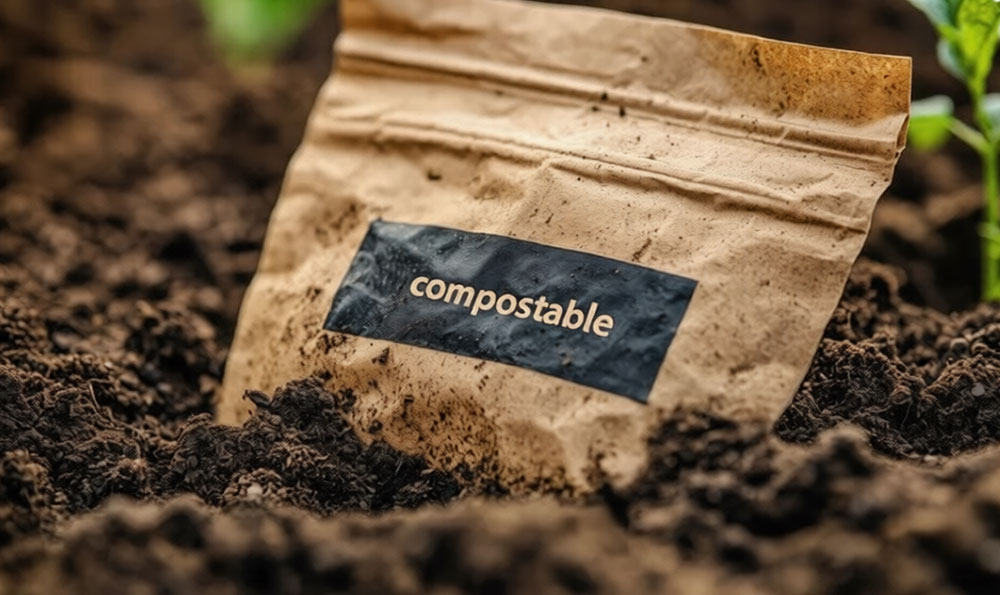
The difference between compostable and recyclable food packaging is not only environmental wording. It is a difference in how the package is designed to be handled after use.
Compostable packaging is designed to return to composting systems under suitable conditions.
Recyclable packaging is designed to keep materials in circulation through recycling systems.
Both can support sustainable packaging goals, but they solve different problems.
For organic food brands, the decision should be based on three practical questions.
First, what does the product need to stay fresh?
Second, what sustainability message can the brand honestly support?
Third, what end-of-life route is realistic in the target market?
If the product requires a high oxygen barrier, long shelf life, and export distribution, recyclable high-barrier packaging may be more practical. If the product is premium, natural, short-to-medium shelf life, and sold to eco-conscious consumers, compostable packaging may strengthen the brand story.
When BioPack helps buyers choose between compostable and recyclable food packaging, we usually follow this sequence.
The material should match the product’s main risk. Coffee needs aroma protection. Nuts need oxygen barrier. Dried fruits need moisture control. Powders need sealing stability. Snacks need oil resistance.
Once the product risk is clear, the material direction becomes more practical.
A product sold locally with a short shelf life does not need the same structure as a product shipped internationally and stored for several months.
Longer shelf life usually requires stronger barrier performance. This may affect whether compostable or recyclable packaging is more suitable.
A product sold in organic stores, online subscription boxes or specialty coffee shops may benefit from compostable packaging storytelling. A product sold through supermarkets or export distributors may need recyclable structures with clearer retail compatibility.
Packaging claims should be specific and supportable. Instead of vague words such as “green” or “eco-friendly,” buyers should use claims that match the actual structure.
For example:
compostable under industrial composting conditions
made with recyclable mono-material PE
designed for PE recycling stream
compostable packaging for dry food applications
recyclable pouch for organic snacks
Clear claims reduce risk and help customers understand the package correctly.
Test before mass production
No packaging decision should go directly from quotation to bulk order without sample testing.
Buyers should test:
filling performance
sealing strength
zipper function
valve performance, if used
drop resistance
odor transfer
moisture resistance
shelf appearance
storage performance
A small sample test can prevent costly problems after launch.
One common mistake is choosing packaging based only on the sustainability label. Compostable, recyclable, and biodegradable are not interchangeable terms. Each has a different meaning, different conditions, and different market implications.
Another mistake is ignoring product protection. If packaging fails and the food is wasted, the environmental result may be worse than expected. Sustainable packaging must still protect the product.
Some brands also overlook accessories. A zipper, valve, window, or label can affect the final sustainability claim. For coffee packaging, the valve is especially important. For resealable snack or dried fruit packaging, the zipper also needs to be reviewed.
A fourth mistake is copying a competitor’s packaging without understanding the structure. Two pouches may look similar, but the materials, barriers, and sustainability claims can be completely different.
Finally, many buyers ask for a quote before preparing enough information. A packaging supplier can give a much better recommendation when the buyer shares product type, filling weight, shelf life target, target market, bag style, and printing needs.
One common mistake is choosing packaging based only on the sustainability label. Compostable, recyclable, and biodegradable are not interchangeable terms. Each has a different meaning, different conditions, and different market implications.
Another mistake is ignoring product protection. If packaging fails and the food is wasted, the environmental result may be worse than expected. Sustainable packaging must still protect the product.
Some brands also overlook accessories. A zipper, valve, window, or label can affect the final sustainability claim. For coffee packaging, the valve is especially important. For resealable snack or dried fruit packaging, the zipper also needs to be reviewed.
A fourth mistake is copying a competitor’s packaging without understanding the structure. Two pouches may look similar, but the materials, barriers, and sustainability claims can be completely different.
Finally, many buyers ask for a quote before preparing enough information. A packaging supplier can give a much better recommendation when the buyer shares product type, filling weight, shelf life target, target market, bag style, and printing needs.
From a supplier’s point of view, we do not recommend choosing compostable or recyclable packaging as a fixed rule.
The best sustainable food packaging is the one that fits the product, protects shelf life, supports the brand claim and works in the buyer’s market.
Compostable packaging is powerful when the brand story is natural, organic, and waste-conscious. Recyclable packaging is practical when the brand needs collection compatibility, retail acceptance, and stronger commercial flexibility.
For some organic food brands, compostable packaging will create stronger brand differentiation. For others, recyclable packaging will reduce operational risk and support larger-scale distribution.
A good packaging decision is not made by trend. It is made by matching product performance with market reality.
Choose compostable food packaging if your brand focuses on natural ingredients, organic positioning, plant-based values and premium eco storytelling, and if the material can meet your shelf life and barrier needs.
Choose recyclable food packaging if your brand needs stronger retail compatibility, practical recycling communication, durable packaging performance, and stable supply for larger orders.
For organic food brands, the best solution may be a custom structure designed around your exact product.
Before making a decision, confirm:
what your product needs to stay fresh
how long it must stay fresh
where it will be sold
what environmental claim you want to make
whether the full package supports that claim
whether samples have been tested
This approach helps reduce packaging risk and improves the chance that your sustainable packaging will perform well in the real market.
BioPack provides custom compostable and recyclable packaging solutions for organic food brands, coffee roasters, snack producers, dried fruit suppliers, tea brands, powder product companies and natural food businesses.
Our packaging options include:
compostable food bags
recyclable food bags
compostable coffee bags with valve
recyclable stand up pouches
flat bottom food bags
side gusset bags
zipper pouches
high barrier food packaging
custom printed sustainable food packaging
If you are not sure which structure is suitable, send us your product type, filling weight, shelf life target, storage condition, and target market. BioPack will help you compare compostable and recyclable options and recommend a packaging structure for your product. Get Packaging Recommendation from us!
FAQ
Is compostable packaging better than recyclable packaging?
Not always. Compostable packaging is better when the brand wants a strong natural, and compostable message. Recyclable packaging may be better when the product needs stronger durability, clearer recycling communication, or wider retail compatibility.
Can compostable food packaging protect freshness?
Yes, but the structure must match the product. Coffee, nuts, dried fruits, and powders may require different oxygen or moisture barrier levels. Buyers should test samples before placing bulk orders.
Is recyclable food packaging suitable for organic food brands?
Yes. Many organic food brands choose recyclable food packaging because it can combine sustainability, shelf appeal, and practical packaging performance. Mono-material recyclable pouches are commonly used for dry food products.
Which packaging is better for organic coffee?
Organic coffee usually needs high barrier protection and a one-way valve. Compostable coffee bags are suitable for premium eco-positioned roasters, while recyclable coffee bags may be better for brands focused on recycling compatibility and larger retail distribution.
What is the best packaging for organic dried fruits?
Organic dried fruits need moisture-resistant packaging. A stand up pouch with zipper is often suitable. Recyclable high-barrier pouches are practical for longer shelf life, while compostable pouches can support premium natural branding.
Can a food pouch be both compostable and recyclable?
In most cases, flexible food packaging is designed for one main end-of-life route. A compostable pouch is designed for composting conditions, while a recyclable pouch is designed for recycling streams. Buyers should avoid making both claims unless the full structure is properly verified.
What should I prepare before asking for a packaging quote?
Prepare your product type, filling weight, bag size, shelf life target, target market, sustainability preference, printing design, zipper or valve requirement and estimated order quantity. This helps the supplier recommend a more accurate structure.
How can organic food brands avoid greenwashing?
Use clear and specific claims. Avoid vague words such as “eco-friendly” without support. Make sure the material, zipper, valve, label and printing all match the sustainability claim printed on the package.


