
Views: 99 Author: Site Editor Publish Time: 2026-02-03 Origin: Site

As snack brands and food manufacturers move toward sustainable packaging, compostable potato chips bags are gaining massive attention.
But one critical question keeps coming up from brand owners, procurement teams, and even consumers:
What composting conditions do compostable potato chips bags actually require to break down properly?
The answer is more nuanced than most people expect—and misunderstanding it can lead to compliance risks, greenwashing accusations, and unhappy customers.
This article breaks it all down clearly.
Why Composting Conditions Matter for Potato Chips Packaging
Potato chips packaging is technically challenging.
Bags must provide:
High oxygen and moisture barriers
Grease resistance
Shelf-life protection
Lightweight and flexible structure
To achieve this, most compostable potato chips bags use multi-layer bio-based materials, which means they do NOT behave like food scraps or paper in composting environments.
Understanding the right composting conditions is essential before choosing or marketing compostable packaging.
Are Compostable Potato Chips Bags Home Compostable?
In most cases: no.
The majority of compostable potato chips bags on the market are industrially compostable, not home compostable.
Why home composting usually doesn't work
Home compost systems typically lack:
Stable temperatures above 55–60°C
Controlled humidity levels
Active microbial environments
Consistent aeration and turning
Without these conditions, compostable films may remain intact for months—or even years.
If a compostable potato chips bag is not explicitly certified for home composting, it should not be marketed as home compostable.
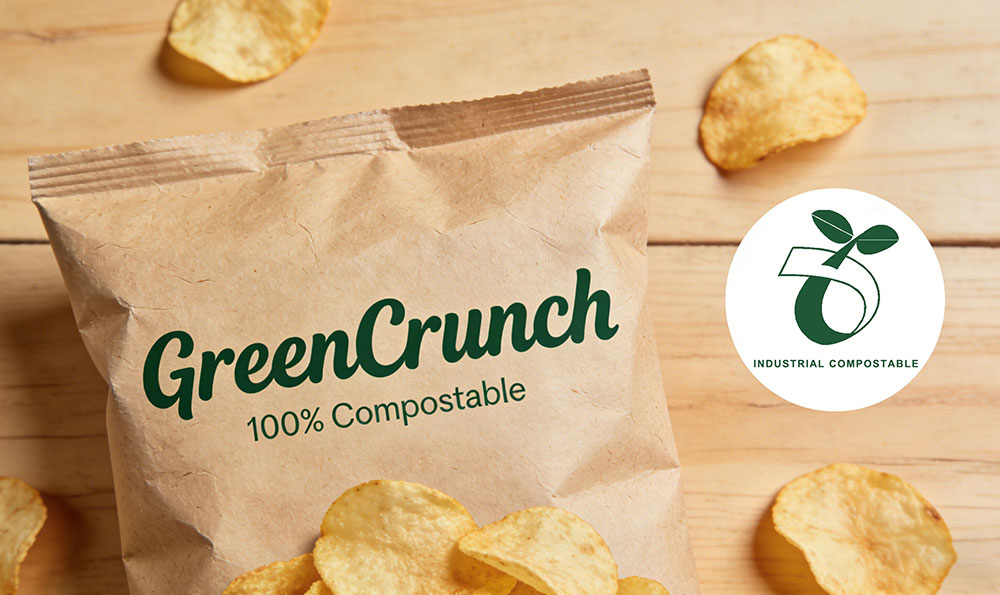
Industrial Composting: The Conditions Compostable Chips Bags Really Need
Industrial composting facilities are specifically designed to handle compostable packaging materials.
Typical industrial composting conditions include:
Temperature: 55–65°C (131–149°F)
Humidity: 50–60%
Oxygen flow: Controlled aerobic environment
Microbial activity: High and consistent
Processing time: 90–180 days
Under these conditions, certified compostable potato chips bags can fully break down into CO₂, water, and biomass, leaving no toxic residue.
Common Materials Used in Compostable Potato Chips Bags
Most compostable chips packaging relies on bio-based multi-layer structures, such as:
PLA (polylactic acid)
PBAT-based compostable films
Cellulose or paper laminated with compostable coatings
These materials require heat and microbial activity to decompose—another reason industrial composting is essential.
Why Not All Compostable Potato Chips Bags Are Truly Customizable
One major frustration for brands is discovering that not all compostable films support full customization.
Common limitations include:
Limited barrier performance compared to plastic
Restrictions on ink types (must use compostable or low-impact inks)
Constraints on high-gloss finishes and metallic effects
Fewer material options for ultra-thin structures
This is why working with an experienced compostable packaging manufacturer is critical—especially for snack brands that need custom sizes, branding, and performance stability.
What Brands Should Clearly Communicate to Consumers
To avoid confusion and compliance issues, brands using compostable potato chips bags should always clarify:
"Industrially compostable only" (if applicable)
Proper disposal instructions
Certification standards used
What composting environment is required
Clear communication builds trust—and protects your brand.

Choose Compostable Packaging with the Right Conditions in Mind
Compostable potato chips bags are a powerful step toward sustainability—but only when matched with the right composting conditions.
And the right packaging partner can help you balance sustainability, shelf life, and customization—without compromising compliance.
Looking for Compostable Potato Chips Bags That Actually Work?
If you're sourcing custom compostable potato chips bags and need help selecting the right material structure, barrier level, and compostability standard, working with an experienced manufacturer can make all the difference.
FAQs
Q1: Are compostable potato chips bags home compostable?
Most compostable potato chips bags are not home compostable. They typically require high temperatures, controlled humidity, and active microbial environments only found in industrial composting facilities.
Q2: What composting conditions do compostable potato chips bags need?
Compostable potato chips bags usually need industrial composting conditions, including temperatures of 55–65°C, controlled oxygen flow, high microbial activity, and a composting period of 90–180 days.
Q3: How long do compostable potato chips bags take to break down?
In industrial composting facilities, certified compostable potato chips bags generally decompose within 3 to 6 months, depending on material structure and facility conditions.
Q4: What materials are used in compostable potato chips bags?
Common materials include PLA, PBAT-based compostable films, and cellulose-based structures. These materials are plant-based and designed to break down under controlled composting conditions.
Q5: Why don't compostable potato chips bags break down at home?
Home composting environments usually lack the sustained heat, moisture, and microbial activity needed to decompose compostable films, causing bags to remain intact for long periods.
Q6: Are compostable potato chips bags better than recyclable bags?
It depends on local infrastructure. Compostable bags are ideal where industrial composting is available, while recyclable mono-material bags may be better in regions with advanced recycling systems.
Q7: How should brands label compostable potato chips bags?
Brands should clearly state whether the packaging is industrially compostable, include disposal instructions, and avoid labeling the bag as home compostable unless properly certified.


