
Views: 99 Author: Site Editor Publish Time: 2026-06-08 Origin: Site

For some products, heat is not just part of the packing process. It is a risk.
Chocolate can soften before it reaches the shelf. A coated snack bar can lose its surface quality. A protein bar may become misshapen if the wrapping process is not controlled well. Frozen snacks and selected healthcare products may also require packaging that avoids unnecessary temperature stress during sealing.
This is where cold seal packaging film becomes valuable.
Cold seal packaging film seals through pressure rather than heat. The film is coated with a pressure-sensitive adhesive in the sealing area. When the coated surfaces are pressed together, the package closes without heated sealing jaws. For heat-sensitive products and high-speed flow wrapping lines, this sealing method can help protect product quality while improving packing efficiency.
At BioPack, we do not treat cold seal film as a one-size-fits-all material. A working cold seal packaging structure needs to match the product, machine speed, film tension, adhesive pattern, shelf-life target, print design and market requirement. When these details are handled properly, cold seal packaging can give brands a cleaner, faster and safer way to pack sensitive products.
Cold seal packaging film is a flexible packaging film that forms a seal by pressure instead of heat. It is usually supplied as printed rollstock film and used on automatic flow wrapping machines for single-serve products such as chocolate bars, protein bars, snack bars, wafers and frozen novelties.
The important part is not only the film itself. The performance depends on how the cold seal adhesive is applied, where the sealing area is placed, how the film runs on the machine and whether the material structure gives the product enough barrier protection.
In simple terms, cold seal packaging is not just “no-heat sealing.” It is a packaging system designed around product sensitivity and production speed.
Traditional heat seal packaging uses temperature, pressure and dwell time to create a seal. This works well for many flexible packaging formats, but it can create problems when the product does not tolerate heat.
Cold seal packaging removes heat from the sealing step. The film closes when adhesive-coated areas are pressed together. This helps reduce the risk of melting, deformation or surface damage during packing.
For chocolate brands, this can help protect product shape and finish.
For protein bar and snack bar brands, it can support cleaner wrapping at higher speeds.
For frozen products, it avoids adding extra heat during the sealing stage.
For selected healthcare or specialty items, it can reduce unnecessary temperature exposure during packaging.
From a supplier’s perspective, this is the main reason cold seal packaging is often considered for heat-sensitive products: it protects the product while keeping the packaging line efficient.
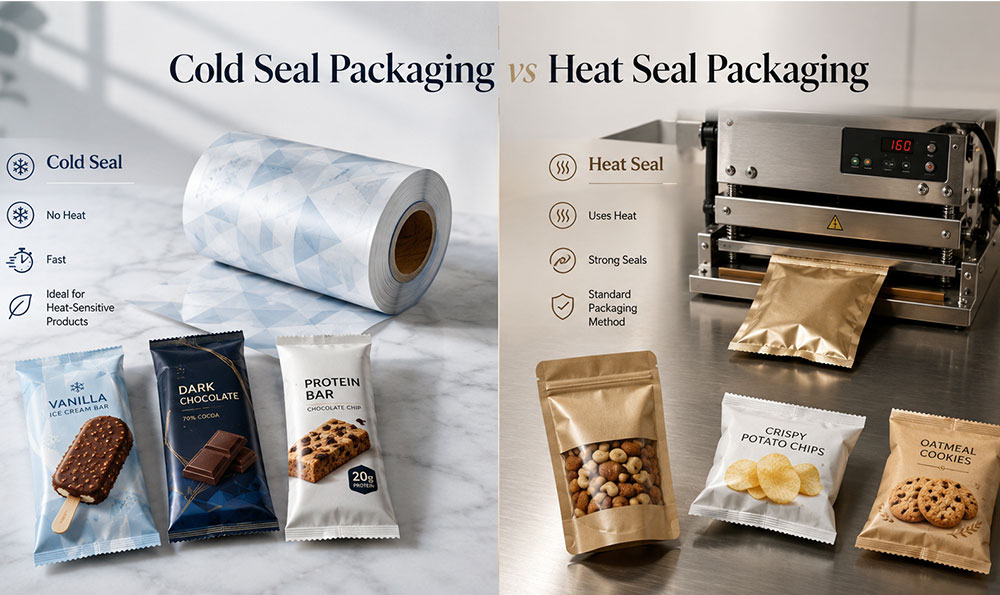
Cold seal and heat seal packaging are both useful. The better choice depends on the product and the production environment.
Heat seal packaging is widely used for pouches, bags, rollstock film, frozen food packaging, snack packaging and many other flexible packaging formats. It offers strong sealing performance and broad material choices, but it needs heat to activate the sealant layer.
Cold seal packaging is more suitable when the product may be affected by heat or when a fast flow-wrapping process is required. It relies on pressure-sensitive adhesive rather than heated sealing jaws.
A simple way to decide:
Choose cold seal packaging when the product is heat-sensitive, the packing line runs fast, and the product needs clean flow-wrap presentation.
Choose heat seal packaging when the product can tolerate heat and the packaging format requires a conventional heat-sealable structure.
The wrong sealing method can lead to product damage, weak seals, poor machine performance or unnecessary production waste. This is why BioPack normally reviews the product, machine and shelf-life requirement before recommending a cold seal or heat seal structure.
Chocolate is one of the most common products for cold seal packaging. It is sensitive to heat, surface marks and shape changes. Cold seal film helps reduce heat exposure during wrapping and supports a cleaner finished pack.
It can be used for chocolate bars, candy bars, coated wafers, confectionery snacks and premium single-serve sweets. For retail brands, custom printed cold seal film also gives enough space for brand graphics, flavor differentiation, nutrition details and shelf-ready design.
Protein bars and energy bars are usually packed individually and often produced in large quantities. Packaging must run smoothly on automatic machines while protecting the bar during transport, retail display and e-commerce handling.
Cold seal rollstock film works well for this type of product because it supports fast wrapping, clean sealing and consistent printed presentation across different flavors or product lines.
Many cereal bars and snack bars contain grains, nuts, dried fruit, coatings or fillings. Their structure can be affected by heat or unstable machine settings.
Cold seal packaging can help these products move through high-speed flow wrapping lines with less heat stress and better package consistency.
Wafers, biscuits and coated snacks need packaging that protects appearance and texture. For products with coatings or delicate surfaces, cold seal film can be considered when traditional heat sealing creates quality concerns.
Frozen snacks and ice cream products need packaging that performs under cold-chain conditions. Cold seal packaging can be useful for selected frozen products because it avoids applying heat during sealing.
For this category, testing is especially important. The film must be checked for low-temperature handling, seal stability, barrier protection and distribution performance.
Some healthcare, medical or specialty products may require reduced heat exposure during packaging. Cold seal packaging can be considered in these cases, but the project should be reviewed carefully for material safety, cleanliness, documentation and sealing validation.
The biggest advantage of cold seal packaging is that it closes without heat. This helps protect products that may soften, melt, deform or lose quality during conventional heat sealing.
Cold seal film can support fast production on horizontal flow wrapping lines. Since the seal forms by pressure, it can reduce dependence on heat-up time and sealing dwell time when the machine and film are correctly matched.
For chocolate, protein bars and snack bars, the package is part of the buying decision. Cold seal rollstock film can be custom printed with brand artwork, flavor systems, product claims and retail graphics. A clean pack helps the product look more reliable and professionally made.
A good cold seal packaging structure can help protect the product from handling, moisture, oxygen, aroma loss or external contamination, depending on the selected material structure. The final protection level depends on the film layers, barrier requirement and seal design.
Cold seal film can be developed with different substrates and structures. Depending on the product, it may include printed film laminates, barrier layers, paper-based materials or recyclable-oriented structures.
More food brands are looking for packaging that supports lower-impact material choices. Cold seal packaging can be developed with recyclable or paper-based structures in suitable applications. However, sustainability should always be verified through real product testing, not only through material claims.

For heat-sensitive products, sustainable packaging is not always simple. A material may look more eco-friendly, but it still needs to seal properly, run on the customer’s machine and protect the product through its shelf life.
That is why BioPack evaluates sustainable cold seal packaging from three angles:
First, can the structure protect the product?
Second, can it run on the packaging machine?
Third, can the sustainability claim be supported by the actual material design?
For some products, recyclable flexible packaging may be suitable. For others, paper-based cold seal structures may be worth testing. In some cases, a conventional high-barrier structure may still be needed to prevent product waste, which is also part of sustainability.
A responsible packaging supplier should help the brand compare real options instead of simply promoting one “eco” material for every product.
BioPack provides custom flexible packaging solutions for food, snack, coffee, powder, health food and specialty product brands. For cold seal packaging film, we support customers from material evaluation to printed rollstock production.
We can help with material structure selection, barrier recommendation, custom printing, roll direction, film thickness, cold seal coating area, sample testing and bulk production.
For brands seeking a more sustainable route, we can also evaluate recyclable, paper-based or lower-impact structures based on product performance rather than generic claims.
If your product is sensitive to heat, cold seal packaging film may help improve packing efficiency and protect product quality.
BioPack can develop custom printed cold seal film for chocolate, protein bars, energy bars, snack bars, frozen snacks and other heat-sensitive products.
To receive an accurate recommendation, please share your product type, package size, roll width, machine type, packing speed, shelf-life requirement, printing design and estimated order quantity.
Contact BioPack to request a cold seal packaging film sample or get a custom packaging quote.
What is cold seal packaging?
Cold seal packaging is a flexible packaging method that uses pressure-sensitive adhesive to seal the package without heat. It is commonly used for heat-sensitive products and high-speed flow wrapping applications.
Why is cold seal packaging suitable for heat-sensitive products?
Cold seal packaging forms the seal through pressure instead of heat. This helps reduce the risk of melting, deformation, surface damage or quality loss during packing.
What products are suitable for cold seal packaging film?
Cold seal packaging film is suitable for chocolate bars, candy bars, protein bars, energy bars, cereal bars, wafers, biscuits, frozen snacks and selected specialty products.
Is cold seal packaging good for chocolate?
Yes. Cold seal packaging is widely used for chocolate and confectionery because it avoids heat during sealing and helps protect product shape and surface appearance.
Can cold seal film be used for protein bars?
Yes. Cold seal film is commonly used for protein bars, energy bars and nutrition bars, especially when the product is packed on high-speed flow wrapping equipment.
Can cold seal packaging film be custom printed?
Yes. Cold seal film can be custom printed with brand artwork, flavor designs, nutrition information, barcodes and retail graphics. It is normally supplied as rollstock film for automatic packaging machines.
Can cold seal packaging be recyclable or sustainable?
Cold seal packaging can be developed with recyclable, paper-based or lower-impact material structures in suitable applications. The final structure should be tested for sealing performance, barrier protection and machine compatibility.
What information is needed for a cold seal film quote?
Useful details include product type, package size, roll width, machine type, packing speed, shelf-life requirement, barrier requirement, printing artwork, target market, sustainability goal and estimated order quantity.


