


BioPack's custom cold seal film is designed for high-protein ice bars, frozen protein snacks and other heat-sensitive products packed on high-speed horizontal flow wrapping lines. Available with tailored barrier structures, registered cold seal patterns, freezer-resistant performance and custom printing, the film is developed around each product, machine and storage requirement to improve seal consistency, machinability and shelf presentation.
| size: | |
|---|---|
| Quantity: | |
OGB059
OrganicBiopack
OGB059
10000
CLEAR GLOSS, GLOSS LAMINATE, MATTE LAMINATE, SPOT GLOSS WITH MATTELAMINATED
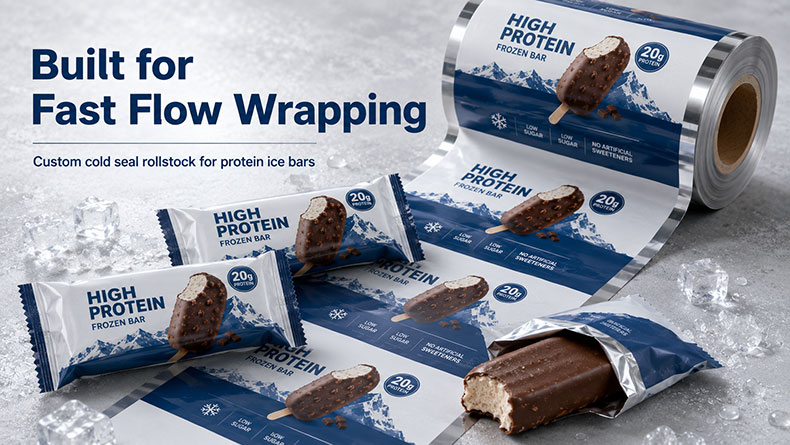
High-protein frozen products are often sensitive to heat, moisture and temperature changes. Their surfaces may also contain chocolate, oils, protein coatings, nut pieces or frost, all of which can affect packaging performance.
Cold seal packaging forms the fin seal and end seals through pressure. It is commonly used where high packaging speed and low heat exposure are both important.
For frozen protein bars, the main benefits include:
Less Heat Around the Product
The package does not depend on heated sealing jaws to activate the seal. This helps reduce the risk of softening chocolate coatings, melting surface layers or affecting the bar shape during packing.
Faster Flow Wrapping
Cold seal rollstock is well suited to continuous horizontal form-fill-seal equipment. When the adhesive pattern, slip level and roll tension are correctly matched, the film can run efficiently at high production speeds.
Better Performance in Frozen Distribution
The laminate can be developed to remain flexible under low-temperature storage and to resist cracking, delamination and seal failure during handling.
Consistent Opening
Cold seal strength is adjusted to provide enough protection during transport without making the wrapper unnecessarily difficult to open.
There is no single structure suitable for every frozen protein bar. BioPack selects the laminate according to the product formulation, desired shelf life, machine speed and target appearance.
A practical option for high-speed wrapping where stiffness, good print quality and efficient machinability are required.
Commonly used for standard frozen bars, snack bars and individually wrapped ice products.
Suitable when additional strength, print stability or puncture resistance is needed.
This structure may be recommended for heavier bars, irregular shapes or products with hard inclusions.
A metallized layer can improve protection against light, moisture and oxygen.
It is often considered for chocolate-coated bars, higher-fat formulations and products with longer distribution requirements.
Transparent structures can be developed when the brand wants to show part of the product while maintaining a specified level of barrier performance.
Mono-PP or mono-PE-compatible structures may be evaluated for projects with recyclable packaging goals.
The full package—including film, inks, laminating adhesive, cold seal coating and release treatment—must be considered before making a recycling claim.
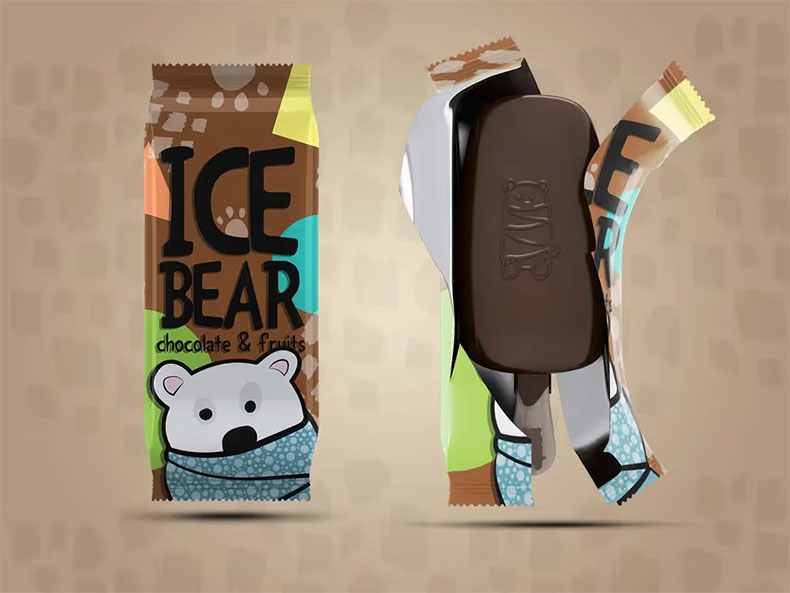
A cold seal material may look correct on paper but still cause blocking, poor tracking or unstable seals on the packaging line.
The cold seal coating is applied according to the package repeat and seal positions rather than simply covering the entire web.
Not every frozen protein bar requires the same barrier.
We consider the ingredients, fat content, chocolate coating, storage period, carton format and distribution route before proposing a laminate. This helps avoid both insufficient protection and unnecessary packaging cost.
For suitable projects, the finished film can be evaluated after low-temperature conditioning.
BioPack works with packaging distributors, contract packers and food brands that need more than a basic price quotation.
Cold seal film bonds through pressure, while heat seal film relies on heated sealing jaws. For high-protein ice bars, chocolate-coated bars and other temperature-sensitive products, cold seal is often the better choice because it reduces heat exposure and supports fast flow wrapping. Heat seal film is more suitable for products that tolerate sealing temperatures and for lines already configured for conventional heat sealing.
The best option depends on the product, machine speed, seal design and storage conditions. BioPack reviews the existing wrapper structure and packaging equipment before recommending cold seal or heat seal film.
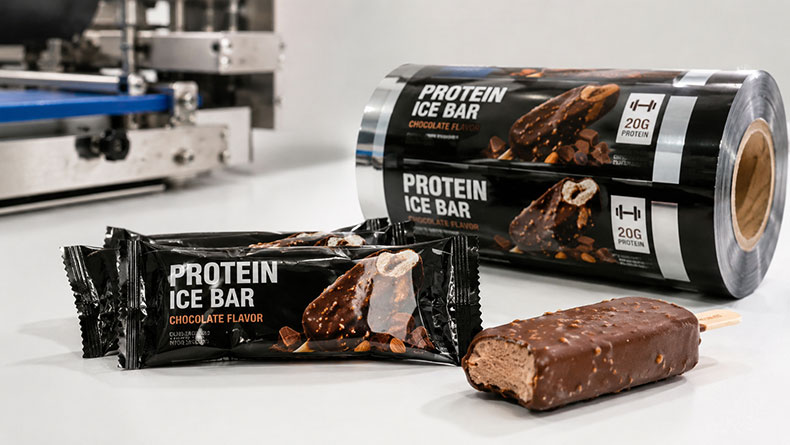
The wrapper must protect the product while communicating its nutritional and brand value in a few seconds.
BioPack supports packaging designs for:
Sports nutrition products
Plant-based frozen snacks
Premium ice cream bars
Low-sugar and functional products
Children's frozen snacks
Dairy-free products
Multi-flavor product ranges
Available design features include matte or gloss surfaces, metallized effects, clear windows, soft-touch finishes and spot gloss details.
For multiple flavors, common design elements can be shared while using color and imagery to differentiate each SKU.
What is cold seal film?
Cold seal film is packaging rollstock with a pressure-sensitive sealing layer. The coated areas bond when pressed together without requiring heat activation.
Why use cold seal instead of heat seal for ice bars?
Cold seal reduces heat exposure around the product and can support faster flow wrapping. It is useful for frozen, chocolate-coated and other heat-sensitive products.
Can cold seal film run on any flow wrapper?
The machine must be suitable or configured for cold seal packaging. Seal pressure, web path, jaw design and roll handling should be reviewed before production.
Can BioPack match my current film?
Yes. We can review an existing sample or specification and propose a comparable or improved structure based on your product and machine requirements.
Is a release coating necessary?
Yes. A compatible release surface is normally required to prevent the cold seal coating from sticking to the opposite side of the roll during storage and unwinding.
Can the packaging be recyclable?
Recyclability-oriented PP or PE structures may be considered. The finished package and local recycling system must be assessed before making any environmental claim.
Can you produce several flavor designs?
Yes. Multi-SKU orders can be coordinated for different flavors, product types or regional packaging versions.
What is the MOQ?
MOQ depends on the film structure, roll width, printing method, cold seal pattern and number of designs. Please provide project details for confirmation.
BioPack supplies custom cold seal rollstock to frozen food manufacturers, protein snack brands, contract packers, packaging distributors and private-label suppliers.
We combine film structure development, registered cold seal coating, custom printing and roll configuration in one project. The goal is to provide packaging that protects the product, runs reliably and supports efficient commercial production.


